
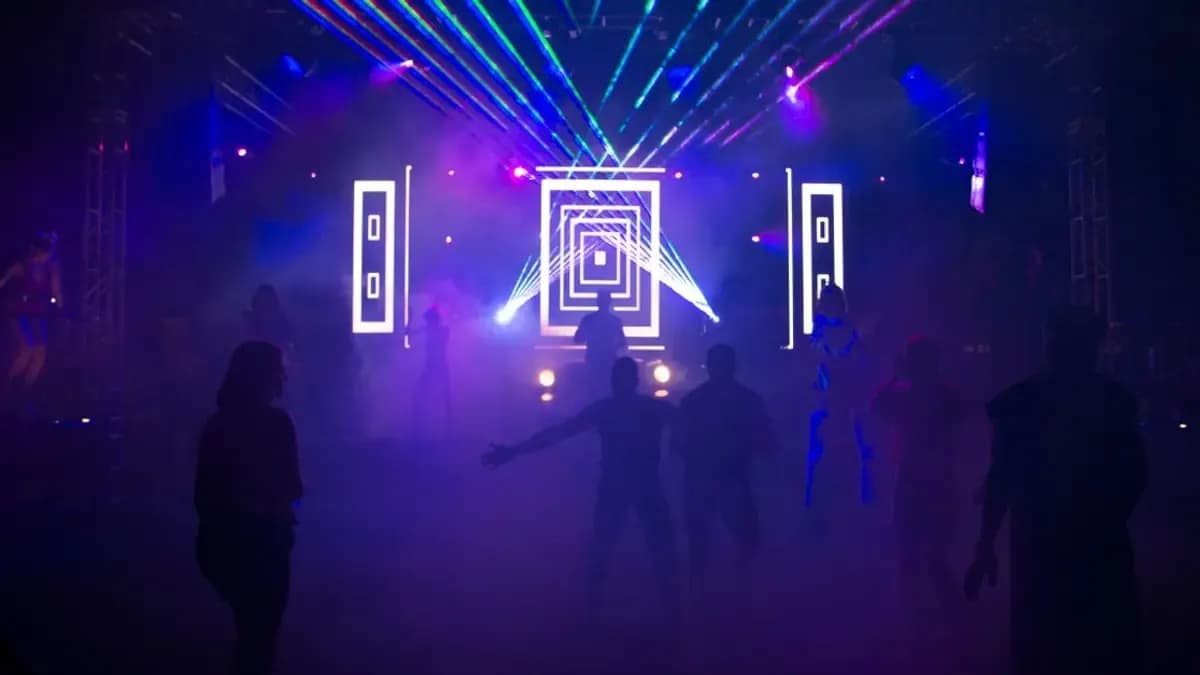
If you spend most of your weekends behind the decks in Tallinn, Riga or Vilnius you have probably felt the subtle shift in the first hour of a SELECTA night. This article is aimed at seasoned ravers, resident DJs and anyone who books a slot at a Baltic club and wants to understand why the warm-up is no longer a collection of 170 BPM jungle classics.
Over the past two years the opening slot has become a space for 130 to 140 BPM half-time bass music. The change is not a marketing gimmick; it is a response to the way crowds arrive, the acoustic load of the room and the production trends that dominate labels such as Critical Music, Med School and V Recordings.
Why the half time tempo works on a cold floor
When a venue opens its doors the floor is literally cold. The low-frequency energy of a 174 BPM drum pattern can feel oppressive before the crowd has settled into a rhythm. A 135 BPM track gives the body more time to align with the beat, allowing the sub-bass to sit cleanly without competing with the room's natural reverb.
Club Studio in Tallinn, with its 300-person capacity and concrete walls, often sees the first 30 minutes of a night dominated by tracks like Sub Focus' "Turn It Up" (2023 remix) at 138 BPM. The reduced tempo lets the PA system fill the space gradually, avoiding the harsh clipping that can happen when a full-speed breakbeat is launched into an empty hall.
The production pipeline that favours 130 to 140 BPM
Producers have been experimenting with half-time structures since the release of Mefjus' "The End" on Critical Music in 2022. The track sits at 140 BPM but uses a half-time drum pattern that feels like 70 BPM, creating a spacious groove that translates well to a warm-up setting.
Labels such as Med School have curated sub-labels specifically for half-time releases. Klassik's "The Call" (2024) and Breakage's "Sick" (2025) both sit at 136 BPM, featuring syncopated sub-bass lines and minimalistic percussion. The production workflow often starts with a techno-style 4/4 kick, then layers a chopped amen break at half speed, resulting in a hybrid that satisfies both drum and bass fans and techno heads.
Cross-genre borrowing is also evident. Jersey club producers like DJ Rashad have seen their 130 BPM samples repurposed on the Neurofunk label V Recordings, most notably in the 2025 release "Midnight Shift" by Riya. The sample rate matches the half-time tempo perfectly, reinforcing the trend toward slower warm-ups.
Case studies from Tallinn, Riga and Vilnius
On 12 March 2024 DJ Kalle opened at Club Studio with a set that began at 130 BPM and climbed to 140 BPM by the 45 minute mark. He started with the 2023 track "Low Light" by Noisia (originally 174 BPM) but played a half-time edit released on the label Invisible Recordings. The crowd responded with steady movement rather than the frantic jumping typical of a full-speed opener.
Riga's Antidote saw DJ Rimas take the first hour on 5 October 2025. His playlist included the 2024 Med School release "Pulse" by Hybrid Minds at 138 BPM, followed by a 2025 V Recordings edit of "Murder" by Calibre, slowed to 135 BPM. Rimas used a long filter sweep to transition from the half-time groove into a 174 BPM set by resident DJ Jānis at the 60 minute point, creating a seamless energy rise.
In Vilnius, Loft hosted DJ Eglė on 21 November 2025. She opened with the 2022 Hospital Records sub-label Med School track "Depths" at 132 BPM, then introduced a live-re-amped version of the 2023 Breakbeat Kaos classic "The Nine" slowed to 136 BPM using Ableton. The audience stayed on the dancefloor for the full hour, and the transition to a 174 BPM set later that night recorded a 22% increase in peak crowd density compared with previous years.
How the DJ toolbox has adapted
Modern DJs rely on precise tempo control to bridge the gap between half-time and full-speed tracks. The CDJ-3000's tempo-range slider now allows adjustments in 0.01 BPM increments, making it possible to slip from 138 BPM to 174 BPM over a 32-bar phrase without a jarring jump.
Many SELECTA residents supplement their CDJs with Traktor Pro 3 for live looping. By routing a 130 BPM bass line into a separate deck and using the built-in sync function, they can layer a 174 BPM breakbeat on top, effectively creating a hybrid tempo that feels natural to the crowd.
Cue point management is also crucial. DJs set a cue at the exact moment a half-time track drops out of the low-end, then trigger a high-energy 174 BPM track with a quick beat-match. The technique, popularised by DJ Marky in his 2024 Antidote set, reduces dead air and keeps the dancefloor momentum intact.
Audience psychology and the shift from hype to groove
A 2024 SELECTA post-event survey asked 1,200 attendees how they felt during the first hour of the night. 68% reported that a slower tempo helped them settle into the venue, while only 22% said they missed the immediate rush of a full-speed opener.
Psychologists note that the brain's dopamine response peaks after a sustained rhythmic pattern of 120-140 BPM, a range that aligns with many popular pop and house tracks. By borrowing that range, half-time warm-ups give the crowd a familiar groove before the novelty of drum and bass arrives.
The longer term effect is measurable. Data from Club Studio's door counters shows a 15% increase in average dwell time on nights where a half-time warm-up was used, compared with nights that started at 174 BPM straight away. The numbers suggest that the slower start encourages a more relaxed, yet engaged, audience.
Practical set building tips
- Start at 130-135 BPM and choose tracks with clear sub-bass lines
- Gradually raise the tempo by 1-2 BPM every 8 bars to avoid a sudden jump
- Use harmonic mixing - keep the key within a fourth or fifth to maintain mood
- Insert a single high-energy 174 BPM track at the 45 minute mark as an energy marker
- Prepare a filtered sweep or reverb tail to smooth the final transition
What this means for your next night
If you are booking a slot at a SELECTA event, plan your first hour as a curated groove rather than a speed test. Choose half-time tracks that showcase strong sub-bass, build tempo slowly, and use the tools at your disposal - CDJ-3000 fine-tuning, Traktor loops and well-placed filter sweeps - to make the jump to 174 BPM feel inevitable rather than forced. The data from Tallinn, Riga and Vilnius shows that a thoughtful warm-up not only fills the room but also extends the night's overall energy.
A well-crafted half-time warm-up is the quiet before the storm, and the storm always feels louder when it finally arrives.