

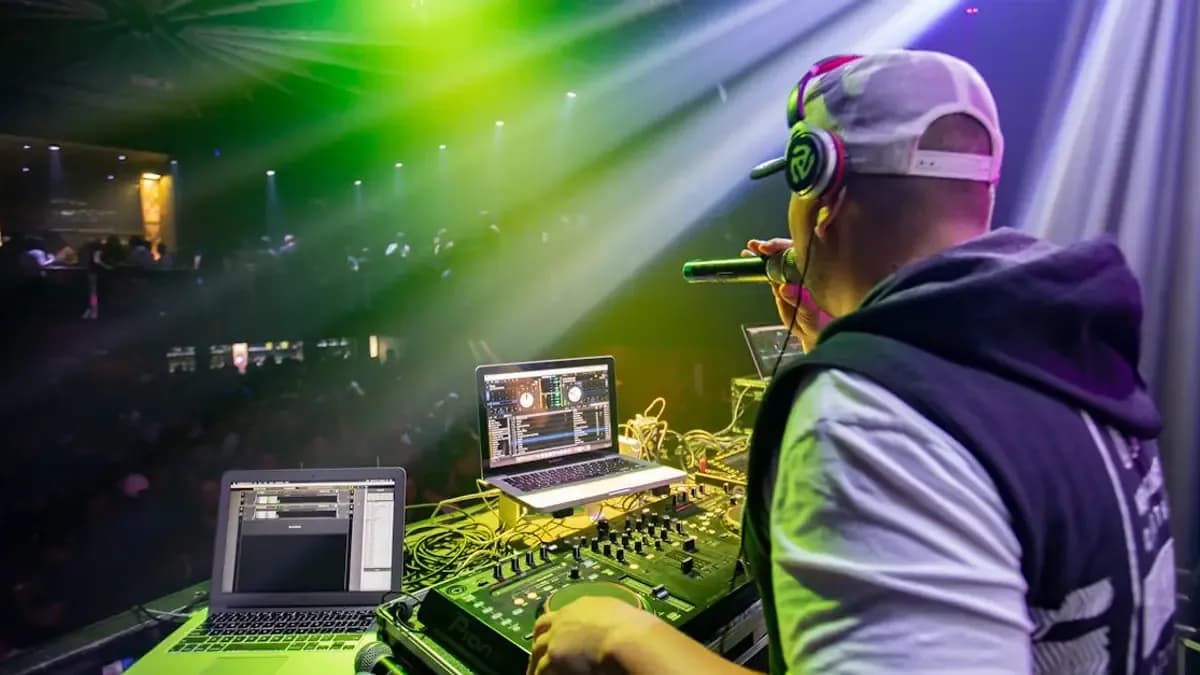
Drum & bass landed in the Baltics late, but it landed hard. While London, Bristol and Brighton were already pressing white-labels in 1994, Tallinn was still finding its electronic footing. By the time the first jungle 12-inches reached Estonia in the late 90s, the local scene was small enough to fit in one Old Town basement. Today SELECTA books rooms that hold 1,500. The journey between those two points is worth understanding.
The late-90s import era
The first wave came through a handful of record diggers who flew to London, came back with crates, and started playing them in small clubs that had no idea what to do with 174 BPM. Helitehas-era promoters in Tallinn ran nights that were two-thirds curious and one-third committed. Riga had a sister scene built around art-school students who treated jungle like contemporary classical music with bigger subs. Vilnius came in via Berlin connections, with a tighter techno-adjacent flavour from the start.
The 2000s: liquid takes over
The liquid wave (Calibre, High Contrast, London Elektricity) gave the Baltics a much-needed entry point. Liquid is forgiving. It rewards musicality without demanding you already love distorted reece bass. The crowds doubled. Then the global financial crisis hit and most of the local promoters went quiet, leaving a vacuum that bedroom DJs filled with mixtape culture.
The Hospital years
Around 2012 to 2015, Hospital Records touring schedule single-handedly normalised drum & bass for a second generation of Baltic ravers. Netsky in Tallinn. London Elektricity in Riga. S.P.Y on a tour that included Vilnius. Suddenly the nights were not underground, they were institutional. Promoters who could deliver Hospital-tier headliners survived. The rest did not.
The post-pandemic reset
When clubs reopened in 2022, the scene was angrier, louder, and significantly more neuro. Mefjus, Phace, IMANU and the Vision Recordings cohort dominated bookings. The 174 BPM tempo had been quietly inflated to 175-176 by producers chasing harder edits. Baltic crowds embraced it. There is a reason a half-step drop hits differently in Tallinn winter.
Where we are now
SELECTA programs roughly 36 nights per year across the three capitals. Helitehas, Hall, Loftas, Maze, Club Hollywood: the venues rotate but the heads stay the same. Headliners come from London, Berlin, Eindhoven, Vienna. Support is increasingly local: Baltic producers signed to UK labels, residents who have been playing the same Friday slot for 8 years and have the records to prove it.
What changed isn't the music. It's the audience. People used to come because dnb was new. Now they come because it's theirs.
The next decade is going to be defined by whether local producers can build their own labels rather than always signing abroad. There are signs it is happening. Watch this space.